
Ancash hug
The time has arrived! Mid-Service medical check-ups and meetings. I really can’t believe it. When I swore in as a volunteer last November, I would never have imagined how quickly a year can go by. They say here that the days go by slow and the weeks go by fast and somehow it’s true. The daily frustrations of trying to build a bathroom seemed never ending, but once it was completed, 9 months had somehow flown by. And now here I am in Lima, reunited with the other Community Health volunteers from my training group, reminiscing about the last year, comparing notes on projects, sharing an endless amount of ridiculous stories and strange occurrences. It’s the last time we’ll all be together like this until we have our completion of service conference next September. And the second year is supposed to go by even faster! It makes me worried that I won’t accomplish everything I want to do. However, after a year out in the campo, I’ve got a good base for the coming year. It’s about time I update everyone on what I’ve been up to the last couple months!
To start, I finished my Cocinas Mejoradas project on November 8th. The whole process started last July when I applied to USAID for a grant to implement a “Healthy Homes” project in my community. I received the money and started the project in September. Forty families signed up for the project, which required the participants to make certain changes to their homes in order to receive a thick iron stove top and an aluminum chimney. Thirty-four families actually completed all the requirements, which were to make guinea pig cages, some kind of plate/utensil storage unit, a vegetable garden, and adobe bricks for the stove. I also required the attendance of 9 out of 10 educational sessions about nutrition, hygiene, etc. It turned out to be a much more challenging project than I imagined and there are many things I would do differently next time around, but after a lot of blood, sweat, and tears (literally), I was so impressed and touched by the women in my project that everything was worth it.
I learned a lot about what it takes to run a project, and that as the manager of such a project, you absolutely must have a thick skin. A few times I got yelled at by different people in the community for reasons that were not my fault- their wife got kicked out of the project because she didn’t show up to the meetings, I wouldn’t let one Senora participate because she already had a cocina mejorada, etc. Meetings almost always started with an argument of some sort, but I think this might be a cultural thing. It seems strange but in my community, when there is an important decision to be made, there is always a heated debate, but after 20 minutes or so, opposing parties always agree on the same thing. So the women in my project would argue about something like one Senora showing up late and then after 10 minutes of arguing they would be ready to pay attention to my charla. After a couple educational sessions like this, I realized I couldn’t take their comments to heart. It was hard to be strict about attendance because I didn’t want to kick anyone out, but I had to. The women learned to show up on time and often beat me to the meetings by half an hour saying “Senorita, estas tarde!” when I was still 5 or 10 minutes early. I think the Senoras are my favorite people to work with- they laugh at me and make me say dirty words in Quechua and make me dance huayno, and at the same time are generally interested in improving the health of their families. I know they appreciated the hard work I put into the project- putting together all the educational sessions, riding in a truck for 7 hours from Huaraz with all the stove tops and then unloading each 60 pound iron stove top by myself at 2 am, printing out photos and diplomas for each participant, finding chimneys that “got lost” on the bus route from Huaraz to San Marcos, and visiting each house several times leaving my house before sunrise to walk to all of them (once getting bit pretty badly by a dog). We had a fantastic party at the end, complete with cuy, potatoes, huayno music, and cake. I have some great photos of the party here.

The whole gang
I couldn’t have done the project without the help of many people, including a health promoter that works with the NGO ADRA-Peru. She translated all of my educational sessions into Quechua and helped me with my project, without any other motive than to help me as a friend. An engineer in my town let me load my stove tops on his truck without even charging me. I had a lot of support from other volunteers too, especially my friend Mike who had done similar projects and gave me good advice when I was really stuck. Throughout the project, I felt like for every obstacle that appeared, some other problem got resolved. Luck and coincidence somehow played on my side many times. All in all, it was a good project that I know could be improved if I do it again in a different community.
Now on to my other project! I’ve been working pretty hard on my school vegetable garden. Managing a garden with elementary school is a challenge. I think we made our garden too big for the little guys to handle and the two biggest problems we’ve had are weeds and irrigation. The kids are too small to pull out the weeds and the hoses don’t get enough water pressure to run the sprinklers. Now it’s rainy season so the watering isn’t an issue. Despite some problems, we did harvest our first crop- radishes! The other crops are coming up slowly but surely, and some just haven’t germinated at all for whatever reason. We’ve made three different types of organic fertilizer, but I mostly manage them which is defeating the purpose. The teachers are afraid that someone will rob the trash can we’re using for biol and the worm cage that I built. So the biol is in a friend’s garden and the worms are in a teacher’s house. I’m trying really hard to make this project a success, but it’s been really difficult.

Harvesting our radishes
We aren’t going to build the latrine because apparently they are building a new school next year with a latrine. However, we did install the sink which was a huge break through! I handed out the toothbrushes and soap to each student and did some handwashing and toothbrushing charlas, and now it’s up to the kids to brush their teeth and wash their hands every day for a month in order to take their toiletries home as a prize. The teachers are supposed to be keeping track on the charts I made with each student’s name, so hopefully they’re helping me out with that. I plan on painting the mural during the rainy season when the kids are on vacation and can help me out with it. I plan on maintaining the garden and composting through the rainy season, and the educational sessions on hygiene and nutrition until school ends around Christmas. This project has been more frustrating than the cocinas mejoradas project and probably more work. It’s also really hard to convince people to work on something that doesn’t get immediate results or to convince someone to incorporate a new thing into the daily routine, such as handwashing. I want to thank everyone for their donations to the project and I would love for you to check out my pictures. Know that I am working hard and putting all the money to good use! The money not used on the latrine will go to something else to improve the school. I haven’t figured it out yet, but it might be new white boards or books or school supplies. It will depend on what the school wants and needs. Here are some photos

Recycled soap holders
I’ve also been busy with my radio show, La Gringa Saludable. It keeps me busy every other week and introduces me to new people in town. I also helped out with two different field-based trainings that took place in Ancash. All the trainees in the health program came to Ancash to get some hands-on experience in the field. I helped out my friend Mike at his site with some latrine building. The following week, the one trainee who will be working in Ancash came to my site to shadow me for a couple days and help me work on some of my projects. I’m still teaching English and helping out with random things in San Marcos, such as a hygiene training for food handlers (restaurant and hotel owners). My youth group kind of collapsed after the swine flu outbreak in July and the students were out of school for a month. I got busy with projects and my youth group kind of dissipated. I’m going to try to teach summer school again this year and pick up my youth group again as kind of an art/cooking club. I got an oven from a returning volunteer in August and it has been keeping my entertained. Baking at 10,000 ft is a new concept, and making creative dishes from the ingredients I can find in San Marcos is pretty fun. I’ve also learned to knit and crochet and I watch all the TV at night that Uncle Steve and Aunt Sandy send me (Thanks!). So I’ve been a busy girl the last couple months!
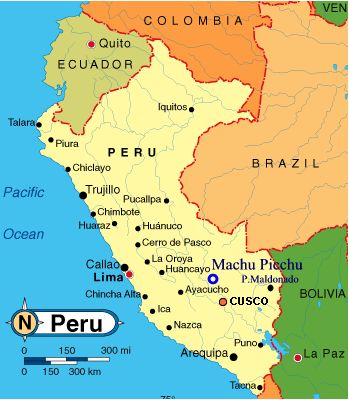
In the midst of all these projects, I’ve done a little bit of traveling and site seeing. I had the opportunity to go to Tumbes up near Ecuador for an HIV/AIDS training. On the way up their and back, I spent a lot of time on buses and had some time to kill at ruins and museums. I stopped in Trujillo on the way up and got to see the ruins of Chan Chan and Huaca de la Luna y del Sol. On the way back, I went to the Museo de Sipan and had some Pizza Hut at the mall in Chiclayo. I’ve done some hiking around Ancash too- I went to the Laguna Churup and the Laguna Purhuay. My town’s festival was in October and a bunch of the Ancash volunteers came out to my side of the mountains for the party. September, October, and November have just flown by and it’s hard to believe that I am at my mid-service point.
Sandboarding in Huacachina
At that half-way mark, Peace Corps sends us to the doctor and the dentist and we have individual program meetings. My mid-service meetings and doctors appointments fell conveniently right before Thanksgiving. We had two days of program meetings then a couple of the Health volunteers and I went down south to see penguins and seals at the Islas Ballestas, drink Pisco in Pisco, and sandboarding at an oasis called Huacachina outside of Ica. Then we returned to Lima for doctors appointments, and then to Arequipa for Thanksgiving. I’m writing this blog from Arequipa, because I’m on the last legs of my vacation. A group of maybe 20 volunteers or so from different programs, departments, and training groups celebrated Thanksgiving by making a ton of side dishes (thanks for all the stuffing, bread mixes, thin mints, and cranberry sauce Mom and Dad!) and grilling or buying rotisserie chicken. It was a really good way to load up for my hike the next day.
Ten of us decided to do a 2-day trek up the volcano Misti. The summit is at 5,825 m or about 19,000 ft. We left at 9:30am from the base at 3,400 m and then hiked until about 3 pm. We made our camp at about 4,000 m, ate a late lunch, and went to bed by about 6pm. I was exhausted and was already feeling the effects of high altitude. I live at 3,100m but I still was nauseous and had a pounding headache. I tried to sleep it off until 1 am when they woke us up to start hiking again. We hiked up rocks and volcanic sand all night. We were all basically zombies just walking on autopilot. Fortunately, it wasn’t windy or super cold like it typically is. I hiked up in ski pants, a fleece, hat and gloves. We finally made it to 5,400 m at about 7am. We hiked up to the summit about 45 minutes later, where there was a giant iron cross. It was snowing a little bit and cold, but for a few minutes the adrenaline took over the nausea and altitude sickness. All 10 of us made it up, which is impressive considering the guide told us only 7 out of 10 people make it up. The way back down only took about an hour and a half because you run down volcanic sand. It was possibly the most physically challenging feat I’ve ever accomplished. It might even be harder than running a marathon. The hiking part wasn’t super difficult; it was the altitude that hit us hard. When we got back to the hostel we all passed out asleep. I was exhausted! Arequipa is a beautiful city and I wish I had a few more vacation days to just relax, eat at all the amazing restaurants, hike through the Colca Canyon and just get to know the city. Instead, it’s back to the grind and back to the rainy season in Ancash. Here are photos from my trips.
Rocoto Relleno (Stuffed spicy red pepper)- A typical Arequipean dishI won’t be coming home for Christmas, sadly, but I will be traveling to Buenos Aires in January! I’m really looking forward to some beach time and some time away from the rain and cold, and of course some time with my parents. Until then, I’ll just be wrapping up my projects and planning the next half of my service. If anyone wants to come visit me, please let me know! Hiking season in Ancash is June-August and I’m planning on going to the jungle up to Colombia/Brazil next November when I finish my service. Now I’m off to site! Hasta la proxima.



No comments:
Post a Comment